
_p1.jpg)
Lead Story
From simulation to reality: the unlikely path to Star Minerva
By ANZ Bloodstock News Staff
@ANZ_News


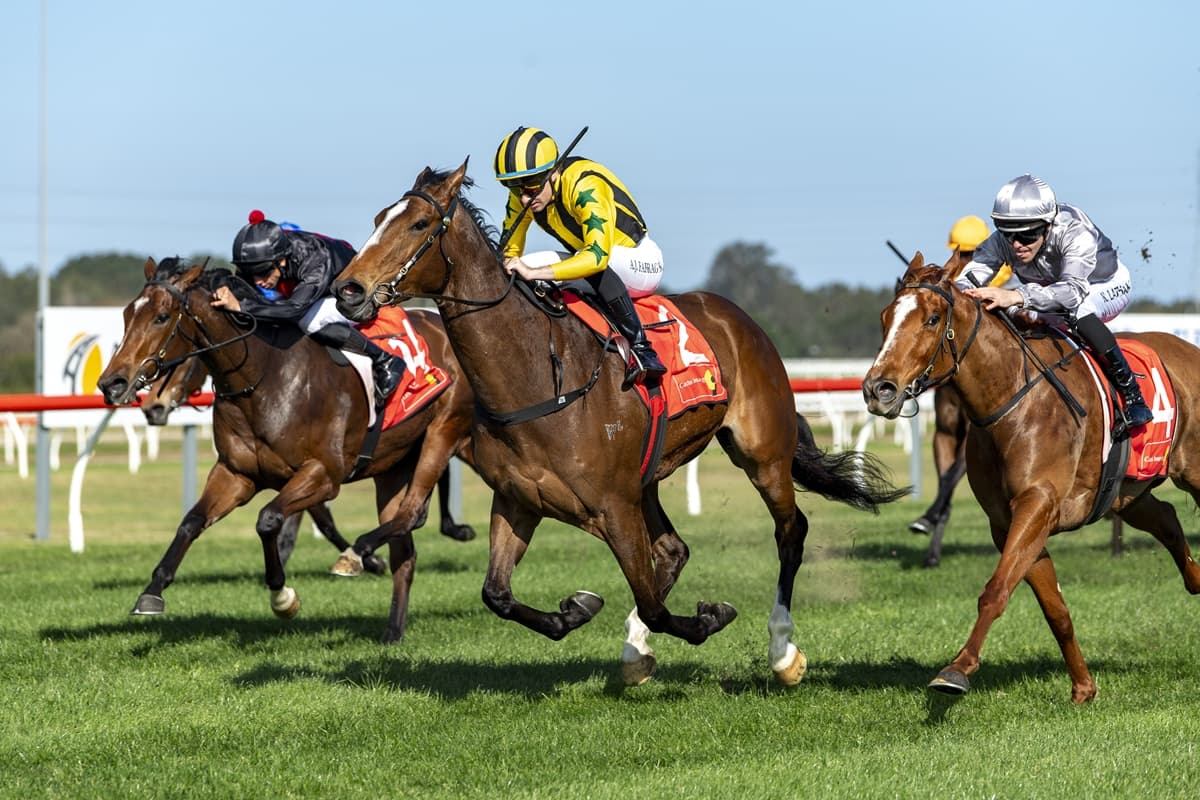
There are easier ways to breed the winner of a provincial maiden than the route taken by Mr Hidari, but very few would be as satisfying.
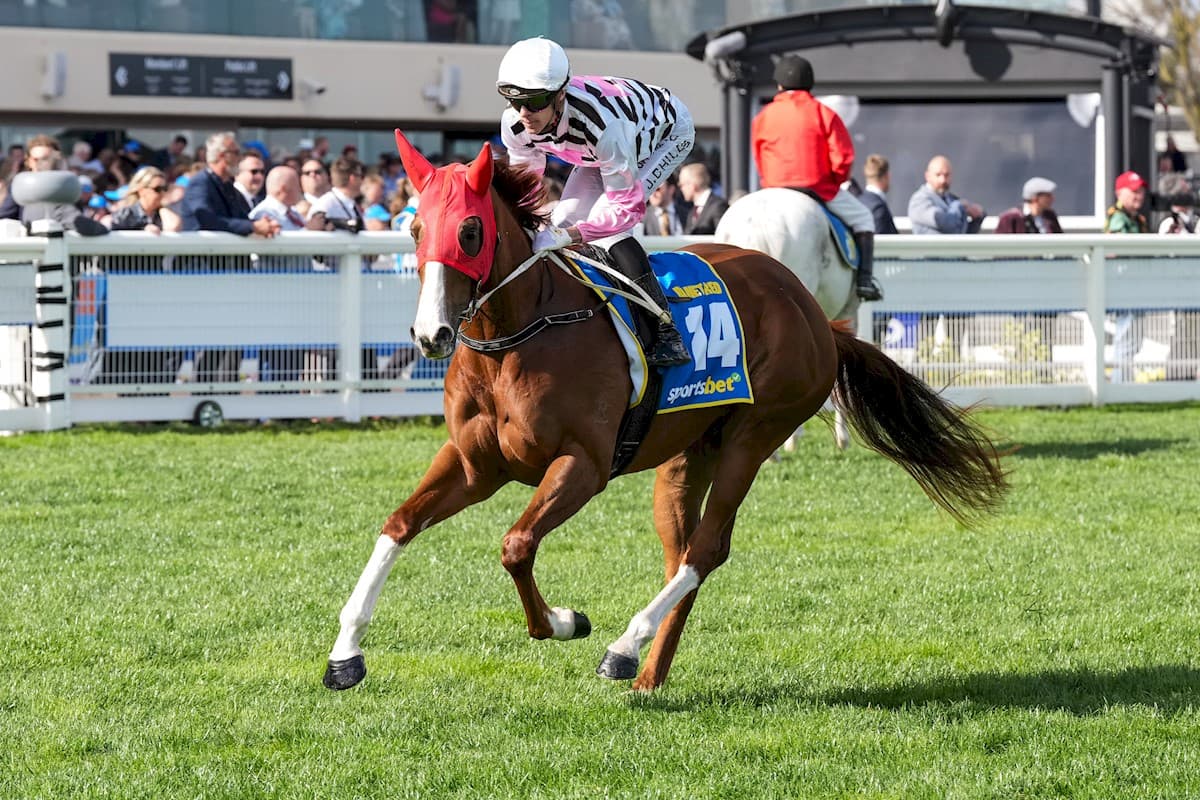
When the unraced four-year-old mare, Star Minerva (Southern Lights) lined up for her first start at Kembla Grange late last month, she had had five plain barrier trials and was considered sufficiently unlikely to win that punters allowed her to start at $81.

What's On

Drawn barrier 11 of 12 in the 1200-metre fillies and mares maiden, she went forward under Adam Farragher, led at the 800 and 400-metre marks and dug deep to rally and defeat the Michael Freedman-trained Memorise (Ghaiyyath) by 0.3 lengths.
As all owners and breeders know, it is hard enough to win a race, let alone win on debut. Put
simply, this was a good, honest maiden victory.
The story behind the filly, however, is
considerably less simple.
Advertisement

Star Minerva was not bred through the conventional process whereby the owner sends their mare to a stallion standing at an established farm. Mr Hidari raced and owns her dam, Star Astraia (Swiss Ace), but when it came to selecting a suitable stallion, Hidari chose to source his own off the track, the Japanese-bred Southern Lights (Sakura Bakushin O).
The stallion Southern Lights was in Japan, while the mare was in New Zealand. Hidari moved the stallion from Japan, found a place for him to stand in New Zealand and persisted through several unsuccessful breeding seasons before eventually producing a live foal who, years later, became his debut winner at Kembla.
For all the pathways to bloodstock ownership that the Australian and New Zealand Thoroughbred industries invest in and promote, Hidari’s introduction to breeding is perhaps the most unconventional and began before he ever owned a real live animal.
With a professional background in management and IT consulting, including roles with Deloitte Tohmatsu Consulting and SAP Japan, Hidari has spent much of his working life around systems, project management and technology. Now based in Dubai, he continues to consult remotely on Japanese HRIS implementation projects while developing an online assessment platform focused on AI prompt skills.
Away from work, one of his interests was KOEI’s Winning Post, a Japanese racing simulation which places the player in the role of an owner-breeder.
KOEI describes the game as allowing players to breed and race horses while developing bloodlines through successive generations.
Advertisement
Hidari estimates that, particularly in his twenties, he played the equivalent of some 300 years as an owner and breeder within the game.
It was hardly the conventional apprenticeship of the thoroughbred breeder. Gamification and AI activations feature heavily in the JRA’s strategy to attract race course attendance and new owners – and perhaps it may also have the desired effect with new breeders.
Whilst the game may be simulated, it is based on real pedigrees and these hypothetical matings encouraged Hidari to study pedigrees deeply, search for patterns and plan several generations ahead.
When he finally decided to become a non-virtual racehorse owner – he had previously visited Oaklands
in Melbourne and had once bid unsuccessfully on Inglis Digital – the exercise became considerably
more real, and expensive.
His original intention was to race horses in Dubai. Believing
New Zealand could provide quality horses at comparatively accessible prices, Hidari turned his
attention to the 2016 Karaka National Yearling Sale.
There was one problem, the sale had already finished. Hidari then began looking through horses which had failed to sell.
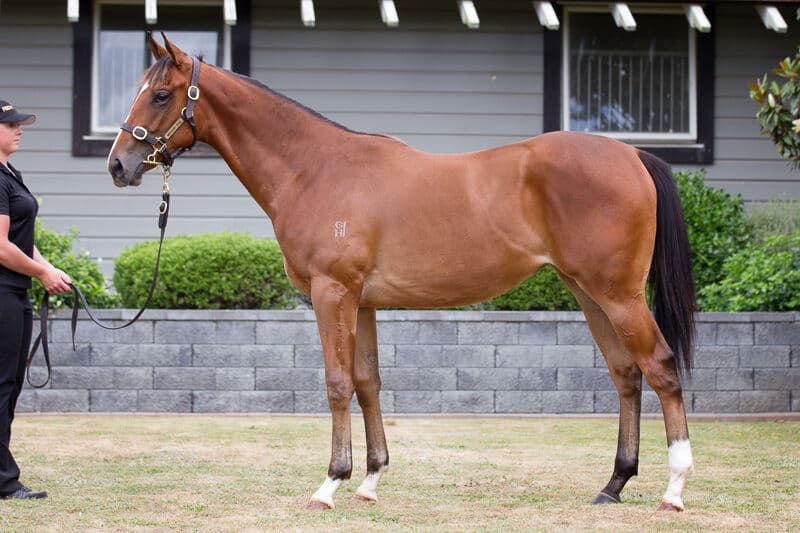
One of them was Lot 826, a Westbury Stud consigned Swiss Ace (Secret Savings) filly out of the Danehill (Danzig) mare Danish Seaway, who had been passed in after failing to reach her NZ$25,000 reserve.
Advertisement
_p1.jpg)
Hidari had never seen the filly in person. He studied her sale photographs, videos online and, more importantly to him, her pedigree.
The daughter of Swiss Ace appealed through the familiar names and influence of Seeking The Gold (Mr
Prospector) in her sireline, balanced against Danehill (Danzig) through the mare side. Hidari was
already considering her residual value and the potential she might eventually offer him as a
broodmare.
He bought her privately from Westbury Stud and named her Star Astraia. He also
bought Golden Aidos (Captain Rio), her paddock mate and companion.
The original plan was still to race in Dubai. That quickly changed when the stable Hidari had arranged to use in the Emirate told him it no longer had room for his pair.
Racing them in New Zealand briefly became Plan B, then came Plan C.
“The prize money in New Zealand was simply too low, so we eventually moved to Victoria,” Hidari told ANZ Bloodstock News.
Neither filly managed to win there and so Plan C needed reconsidering.
Star Astraia had three starts, earning $1,945 before moving stables and suffering a pelvic injury. Hidari received the phone call every owner dreads: the injury was potentially life threatening. But after consulting several vets, a long, slow and ultra conservative treatment was attempted.
Advertisement
.jpg)
Star Astraia recovered eventually but did not regain the willingness to race and the decision was made to retire her.
Whilst unplaced, there was reason to retain some faith in her family.
The pedigree that had attracted Hidari in the first place had blossomed. Star Astraia’s sister Queen Margaret would become the dam of Sharp ‘N’ Smart (Redwood), subsequently a New Zealand Horse of the Year and Group 1 winner in Australia and New Zealand. Star Astraia is also a half-sister to dual Listed winner Absalon (Mossman).
Advertisement
_p1.jpg)
Owning a horse that fails to win a race is something all owners can relate to. Choosing to breed from your favourite filly, despite a poor race record, is also extremely familiar albeit often not recommended. But what Hidari did next – buying his own stallion – is far from familiar.
Hidari had already acquired the Stay Gold (Sunday Silence) entire Rafflesia in Japan with an eye to breed from him and had researched what would be involved in moving and registering a stallion to New Zealand. But Rafflesia wasn’t quite considered the perfect match for his broodmare, which led him to Southern Lights.
The 2011 born entire was by Japanese sprinting great Sakura Bakushin O (Sakura Yutaka O) out of Southern Fairy, a daughter of Southern Halo (Halo). He won three races in Japan’s JRA system and another two on the regional circuit, with his five victories coming between 1200 and 1600 metres and 39 starts.
Southern Lights won the equivalent of AU$400,000 and never started in a black type event.
On paper, he wasn't an obvious stallion prospect, but Sakura Bakushin O was an outstanding sprinter who won the Sprinters Stakes (Gr 1, 1200m) twice.
He went on to become a successful stallion, producing three elite-level winners, including Takamatsunomiya Kinen (Gr 1, 1200m) winner Big Arthur and dual Group 1-winning miler Grand Prix Boss, who both became stallions themselves. In Japan, where leading breeders traditionally aim to produce horses capable of running Classic distances, a specialist sprinting stallion faces a different commercial challenge.
Sakura Bakushin O did remarkably well in that environment, and his influence has also continued
through his daughters. Most notably, he is the broodmare sire of Kitasan Black (Black Tide) and
Satono Reve (Lord Kanaloa).
Southern Lights was not in their class though and his
pedigree was unusual in another way.
Southern Lights is free of both Danzig and Mr Prospector, two influences found with enormous frequency in Australian and New Zealand pedigrees. Yet, his family is hardly devoid of internationally familiar blood.
His third dam is Fairy Bridge (Bold Reason), the dam of breed-shaping stallions Sadler’s Wells (Northern Dancer) and Fairy King (Northern Dancer) while the sireline comes through Sakura Bakushin O and Sakura Yutaka O to the increasingly rare Princely Gift (Nasrullah) line.
For Hidari, that combination provided an appealing mating to Star Astraia, so he made it happen. Rather than pay for a local service fee and send his mare, he bought Southern Lights and shipped the stallion to his mare.
Buying a stallion in a computer simulation takes seconds – buying one in Japan and getting him to a farm in New Zealand proved more complicated.
By the time Hidari acquired Southern Lights, he understood the commitment to the regulatory and quarantine process, but still lacked one fundamental part of the equation: somewhere for the stallions to stand.
Advertisement

“Finding a suitable farm was actually one of the biggest challenges,” he said. “In the end, I found the farm through Facebook.”
The financial logic behind purchasing the stallions was equally unconventional.
Hidari will not disclose their purchase prices, but said the combined cost of Southern Lights and Rafflesia was approximately equivalent to one season’s service fee for a well -established Australian stallion.
To Hidari, whose professional background had trained him to think of long-term costs and risk, ownership offered another form of control.
“If I continued paying significant stud fees every year, there was always the risk that the resulting foals might not race,” he said.
“So from my perspective, owning the stallion myself actually made more sense as a form of risk management.
“from my perspective, owning the stallion myself actually made more sense as a form of risk management
“It wasn’t simply about taking a gamble. I saw it as a way of controlling the costs and managing the risks over the longer term.”
It would be a difficult model to recommend universally. Stallion ownership brings costs and risks
far beyond a service fee, while breeding outcomes stubbornly refuse to conform to spreadsheets,
simulations or pedigree theories. There is often a new theory, silver bullet or “science” being
spruiked to gain an edge and breeders commit to all sorts of theories, nicks, crosses and patterns.
However the old adage; “Breed the best [you can afford] to the best [you can afford] and hope for
the best,” is one of the few that has stood the test of generations.
Hidari had his
theory. He was committed. And initially, he failed. Star Astraia’s official breeding record tells a
concise version of what followed.
She missed to Rafflesia in 2020.
She missed to Southern Lights in 2021.
Then, in 2022, she produced a bay filly by Southern Lights. To reference another time honoured adage, it was a case of third time lucky as that filly was Star Minerva.
As is the case in the non-virtual breeding game, the road to a live foal is rarely simple. Star Astraia initially returned a positive scan to Rafflesia in 2020 before losing the pregnancy. She injured herself, again, and suffered infections. The following season’s Southern Lights mating did not result in a positive scan let alone a foal.
Hidari says he was advised to give up on the mare as a breeding proposition. He had heard that recommended before and whether he was a victim of the Sunk Loss Fallacy or something more common – loving your first broodmare – he pressed on.
For all the effort that had gone into the mating, its product initially looked unremarkable. Hidari recalls Star Minerva being noticeably small and narrow as a foal, with stud staff referring to her as the “skinny little girl”. That changed with maturity.
“Beyond her racing career, I would also regard it as a success if she can become a valuable broodmare and pass this bloodline on to the next generation.
“I’m not setting a specific number of wins as the definition of success
By the time she had completed a five week pre-training preparation in New South Wales, Hidari says the filly weighed 562 kilograms before joining Ciaron Maher’s operation.
Star Minerva had five plain public trials between March and August this year before making her debut as a four-year-old at Kembla Grange. If success is solely measured by ROI, Star Minerva has a lot more to do to repay the faith, patience and passion of her owner.
And her debut victory will not answer whether Hidari's breeding theories are correct, although owning a stallion with a 100 per cent winners to races statistic would definitely earn points on KOEI’s Winning Post.
One maiden cannot prove a theory, however, Hidari’s filly certainly won’t start at 80/1 if she starts this Saturday at Newcastle.
Hidari is not attaching a specific target or number of victories to measure success.
“For me, success for Star Minerva is first and foremost to become a sound and competitive racehorse and to fulfil her potential,” he said.
“Beyond her racing career, I would also regard it as a success if she can become a valuable broodmare and pass this bloodline on to the next generation.
“I’m not setting a specific number of wins as the definition of success.”
That is perhaps an appropriate ambition for a project which has had various iterations, but one relentless focus.
There will be much better horses than Star Minerva produced this season, bred by larger operations, from more fashionable stallions for considerably greater sums. And we will write about hundreds of them in these pages.
Few, however, will arrive at the winning post carrying quite the same story.